Poagao's Journal

Absolutely Not Your Monkey

Feb 02 2010

The convenience of film

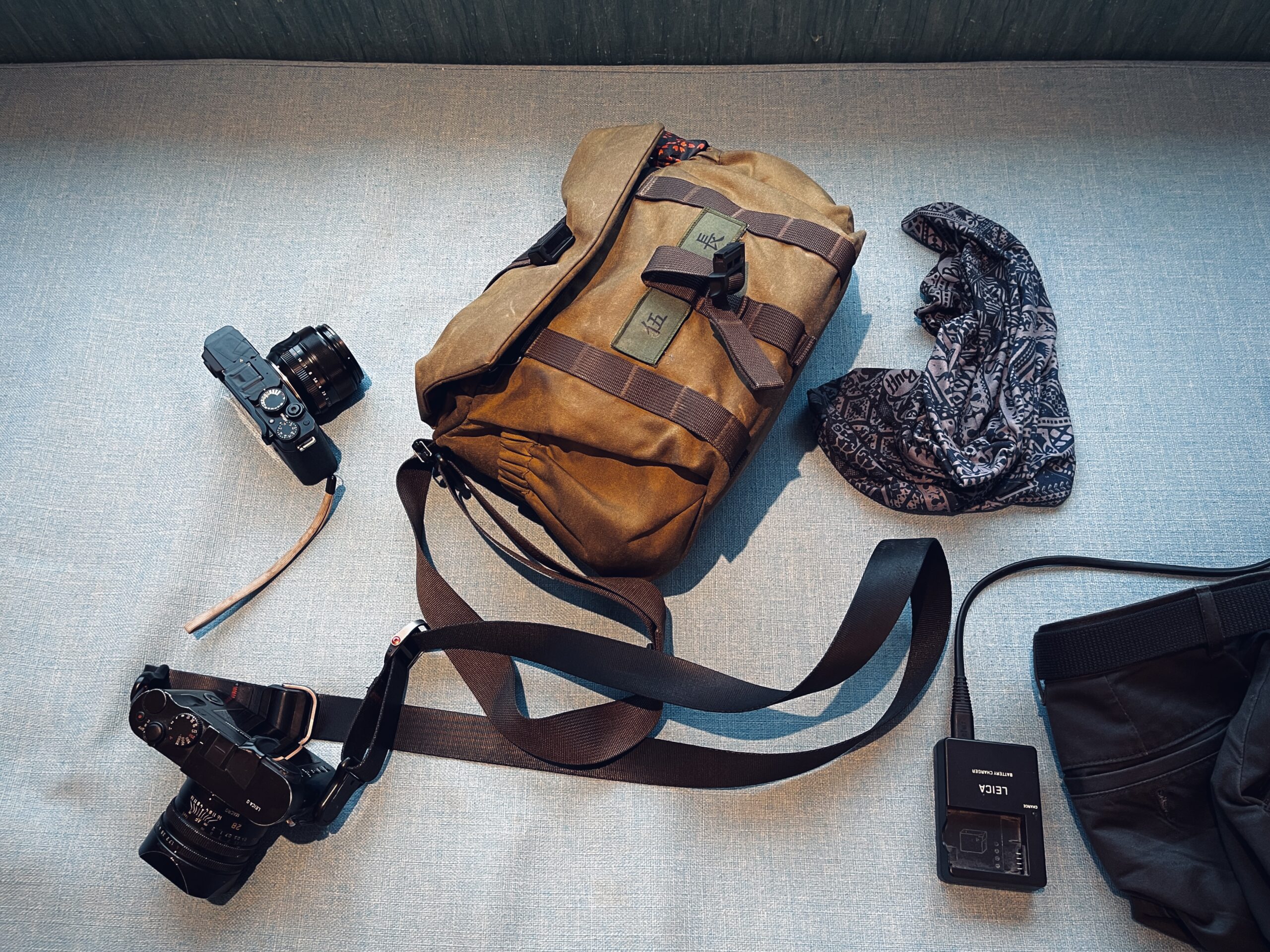
Ever since I sold my LX3 a while back, my Leica M6 has more or less taken its place as my “middle camera”. It’s kind of strange to be back with film, but I’ve noticed something unusual in my experiences using it: I’m getting my film shots up much quicker than my digital ones.

Of course, most of the reason for this is my troubles with Lightroom, which apparently doesn’t play nice with Snow Leopard, necessitating a reinstall of an earlier OS on my iMac to smooth things over, at least until Lightroom 3 comes out of beta. But another reason is my shooting style: when I’m using the M6, which fits in my bag or coat pocket just fine. But I tend to think about shooting differently when I use it; I take more care with my shots and seldom take multiples. People seem to not take as much offense at the sight of the M6 as they do when I’m aiming the Invincible Rabbit at them. However, I also take more substandard shots towards the end of a roll, alas, so eager am I to send it off for processing.

That said, getting the pictures back on a CD the next day is a lot more fun; there’s more anticipation, and I find I have more keepers than I do with digital, and they need hardly any processing at all. Up they go, while my old shots from last summer linger on my hard drives. The psychological block to start in on processing such a mountain of photos makes me hesitate, whereas with a disc of 38 shots, it’s an easy task. To coin a phrase, film just works.

I should note that, if I want to make prints, I’d need to take the original negatives in, negatives that do not contain any adjustments I’d made in post. In this respect digital is more convenient. I haven’t made prints in a while. I am talking with a large photo magazine/publisher about a photo book, however. Seems about time.

I’ve been toying with the idea of getting a GF1, but the pile of unprocessed photos awaiting me makes me feel guilty about getting another camera, and there are always the rumors of something better just around the corner, of course. This will always be the case; there’s always something better just around the corner, somthing that will make your current camera suddenly stop working and retreat back into the drybox, weeping in frustration. But as PMA is coming up, and I’m going to be taking the rabbit with me for the Chinese New Year break, there’s not much of a reason to get another compact just yet. I also have to admit that I’m hooked on the smooth action of the M6 as well as the way it fits in my hands. If Leica made an accessible digital version of this camera, I’d be quite interested, but that doesn’t look like it’s going to happen any time soon.

Which is fine, actually. I’d thought, along with everyone else, that there would be no looking back after the advent of digital, but it turns out most of the problems we thought we were solving werent’ really that big a deal. Funny how that works.

These icons link to social bookmarking sites where readers can share and discover new web pages.
  • Digg
  • del.icio.us
  • Haohao
  • Reddit
  • StumbleUpon
  • Technorati
posted by Poagao at 5:05 pm  
Feb 01 2010

another year

Hard to believe it’s 2010 already. I still find myself typing “19–” sometimes, and more often than not I’ll type “200-” before catching myself. Funny how our brains screw things up.

Ray, Chenbl and I took a drive in the country on Saturday, heading down to Sanxia, where we stopped to take pictures of some fishermen on the river, and then to a Buddhist temple that was getting ready for some kind of celebration, most likely new-year related. Red paper lanterns were strewn all over the basement parking lot. Upstairs, men were polishing the golden statues and women were sweeping the great hall.

We drove on, getting momentarily lost in Sanxia before finding the road to the tiny village of Sanmin, where we had lunch at an old-fashioned restaurant by the river that runs through the town. We were the only customers at first, but soon other parties began to arrive. The place had holes in the walls to let the wind through. We walked around the town after lunch, taking pictures of each other playing butcher behind a sausage stand and petting the daschund of the owner of the local Chinese medicine shop.  The dog would walk up and toss itself on the ground in front of strangers, begging them to rub its tummy.

We got back in the car and kept driving, out to a place called the Batcave. “And here I forgot my bat costume,” Ray said as we pulled up to the gate, where a couple of older aborigine guys were sitting and chatting by the ruins of an old bathroom. The road to the Batcave was an uphill path, still slightly mossy and slippery after the recent rains. We passed an observation tower, and then the path dove into the forest and across a stream that gurgled pleasantly.

We rounded a corner, and my mouth fell open. A fissure opened up above the mountainside on both sides, waterfalls flowing and splashing down one corner at the distant far end. I could see where the bats must have congregated, but the huge open space underneath would also have been great natural shelter for aborigines, with a large hill of rocks in the center like a pulpit. It was almost a religious space, the legendary water curtain cave come to life. I prowled among the rocks in the stream and climbed up next to the waterfalls, taking pictures. It was supremely cool. I wonder what the place is like during a typhoon.

Ray and Chenbl were getting impatient, though, so we went back to the car and off to see one of Chiang Kai-shek’s old villas in Fuxing Village’s Jiaobanshan. It was interesting, but too much has been changed, and fog rolled in, obscuring the views. Ray complained about not being able to take any good pictures in such conditions, but I liked the soft light. It was weird to think of the Chiangs walking around that very area, playing games with the kids and having barbeques. One of the barbeque pictures on the wall was dated the very day I was born, strangely enough.

We had some peanut-butter and chocolate toast and tea at the cafe overlooking the trees stretching into the fog. Again, I kept Chenbl and Ray waiting while I took pictures. That happens a lot when I’m traveling with other people, even other photographers. I’m always off somewhere taking pictures of things nobody else is particularly interested in, and then when they’re taking shots it’s my turn to be bored.

The town was deserted as we walked back down the main street to the car. Everyone had gone back home. A mentally disturbed man walked alongside us for while as the fog was floated across the empty road.

Dinner was various types of tofu and some noodles from a stand on the Daxi Old Street. I was tired and cranky, but satisfied with the day’s activities. The ride back to Taipei was spent mostly in silence. Even Chenbl, who is one of the most talkative people I’ve ever known, was silent. Then again, Chenbl can fall asleep in a chair within seconds.

I took quite a few pictures, and I probably won’t post them for a long time. But that’s a subject for another blog.

These icons link to social bookmarking sites where readers can share and discover new web pages.
  • Digg
  • del.icio.us
  • Haohao
  • Reddit
  • StumbleUpon
  • Technorati
posted by Poagao at 1:39 am  
Dec 30 2009

A ballsy call

I got a call the other day. The woman on the line said that she was from the Xindian police department, and that my home number had been connected to a cellphone that was involved in a phone scam. They wanted me to go down to Taichung to “clear up the issue.”

“Uh, I have to go to work,” I said. Of course, I suspected that this was in itself a scam. I’d gotten scam calls before, but they were crude, obvious attempts (”We’ve got your friend and/or possible relative and are going hurt them if you don’t pay!” “Which friend and/or relative?” “Uh, your….[sound of papers shuffling] great-nephew…?” “What’s their NAME?” “JUST PAY US, DAMMIT!!”), but the pure, unadulterated balls it takes to pull off a phone scam by pretending to be the police investigating a phone scam intrigued me. They were very professional.

The woman said she understood my situation, and then “transferred” me to the Taichung Police Bureau, or so she said. There, another woman, supposedly the desk officer, told me that it was the last day before the case had to be closed, and it was vital that I come down to the station. I’d have thought that using men to impersonate police officers would have been a better tactic, but the women did a passable job. There was a great deal of business sounds in the background, probably other calls.

I repeated my answer that I had to go to work and couldn’t make it. The “desk officer” said that things could “get ugly down the road” if I didn’t come. It seems that the banks have caught on to the scammers’ games and thus making wire tranfers doesn’t work as well as it used to, so they need to actually get the victim to a suitable location to actually get the money out of an ATM for them. At this point, I thought I detected a hint of desperation there, but she remained fairly official sounding. “I’ll have my agent get in touch with you, ok?” I told her.

“Oh, no,” she said, and the pretense of officialdom slipped badly. “You can’t tell anyone, especially family or friends. It’s against the law. You’d be put in jail for two or three years if you told anyone anything about the case.”

Oh, well, I thought. It had been fun for a while, but, ah…no. “You were doing so well!” I told her. “I really liked the premise -very ballsy- and most of the execution, but I’m afraid I’m going to have to dock some points for that last bit. Anyway, thanks for playing!”

And I hung up. I figure they’ll call again, and I’m kind of curious as to what they’ll do if I only speak to them in English…guess I’ll just have to wait and see.

These icons link to social bookmarking sites where readers can share and discover new web pages.
  • Digg
  • del.icio.us
  • Haohao
  • Reddit
  • StumbleUpon
  • Technorati
posted by Poagao at 1:13 pm  
Dec 22 2009

Hualian and Jiaoxi

Over the past week, Chenbl has been showing a group of his friends, three from Malaysia and one from France, around Taiwan. Bored with their continual hot weather, the Malaysians were eager to experience low-temperature traveling, and they tossed aside Chenbl’s warnings about going to Hualian in the winter. For some reason, I decided to tag along as well.

We set off at noon on Saturday aboard the Ziqiang Express. Not as fast or modern as the Taroko Express, but at least seats were available. Although I usually spend such days cooped up at home with the heater on listening to Renaissance tunes, it was nice to get out of Taipei and see the countryside and ocean of the east coast. I’ve always liked Hualian better than the other east-coast cities of Taidong and Yilan; Yilan is too spread out and incohesive, while Taidong seems like an afterthought to the hot springs. Hualian, in my eyes, is the only “comfortably sized” city of the three. It’s been a few years since I was there, but it’s gotten a little more arty and bohemian than it was during my last visit. B&B’s have popped up here and there, and more tourism-related shops have opened.

It wasn’t raining when we arrived at the train station, but it was cold and gray, passengers huddled on the seats in the waiting room. Chenbl seemed to want to drive home his views on the advisability of a trip in this weather, so we ended up renting scooters at one of the places by the station and rode to our hotel, the Mango, a nine-story affair downtown with a nice lobby and so-so rooms with smallish windows.

After putting our luggage away, we got back on the scooters and rode out to Qixingtan, a beach north of the city, by the airport. It was quite cold, and to avoid letting anyone get lost we rode in a line. The blue-gray sky was just the right color to contrast with the containers of a shipyard, but I couldn’t stop to take pictures. I could feel the Invincible Rabbit straining to jump out of its bag as we rode past statues framed by the ocean and sky, but again I couldn’t stop. I compensated by swearing loudly instead. I hate traveling in groups, and this is one of the main reasons why. If it’s just one or two other people, you get more leeway, but with a larger group, you’re basically forced to do whatever they are doing. But I’d signed on; I knew what I was getting into. The foreigners only have this one week here, but I can come back to Hualian any time I want.

So I rode on. We eventually came to a goat restaurant/cafe on the nearly deserted coast, and as we were parking, a long line of people came walking up the beach. At first we thought it was a funeral procession and prepared to leave quickly, but it turned out to be a political march sponsored by the DPP.

The goat place serves goat milk-based drinks, including coffees, teas and just plain hot goat milk. It’s an acquired taste, but it wasn’t too bad, just strange. As we drank, me still stewing over the lost photographic opportunities of the trip out, the sun set, plunging the area into darkness. Outside, the owner was feeding the excited goats in a small hut.

We rode on past the airport runway to another oceanfront park, largely deserted in the cold except for a couple of guys setting up chairs for a concert the next day. Then it was back downtown for a multi-course dinner at a restaurant dedicated to a particular kind of fish; every dish utilized a part of the fish, and the waiter explained each one as they came. I’d never realized that fish were that complicated. There were even fish parts in the ice cream.

After dinner, it was off to a night market. There’s not much I can say about the night market; once you’ve seen one, you pretty much know what you’re in for, i.e. the usual mixture of games and boiled food. I bought another aborigine hat to replenish my stores. Outside, an old man was making money plucking a badly tuned wire on the bridge that lead to the beach. Nobody was interested in the darkness beyond.

Having exhausted wonders of the night market, we rode over to the stone art complex, which is composed of an L-shaped line of huts around the old railway hospital, a wooden building built during the Japanese occupation that’s been converted into display spaces for stone carvings. Several young, bare-chested aborigine men were dancing on the stage. Their skin was a most un-Aboriginal shade of white, and I wondered if it was make-up or just the cold.

I was walking around the veranda of the old building, feeling I’d seen enough stone carvings, when the ground began to vibrate. At first I thought we must be nearby a railroad track and a particularly large train was approaching, but it quickly outgrew such a possibility, and as the ground began to sway and buck, I realized what was going on; it was an earthquake. I’m usually inside for earthquakes; the only one I’ve been on the ground for was the 3/31 temblor a few years ago when the cranes were tossed off the as-yet-unfinished Taipei 101.

This one was much bigger. Alarmingly big. I abandoned all guesswork and suddenly became very agile, hopping off the swaying veranda and running to the center of the lawn, between another building and a water tower, both of which I hoped would remain standing. Other people came running out of the building, and I could hear the crashing of hundreds of stone carvings coming from the complex as the aborigine dancing music stopped.

Gradually, the shaking died down into a slow, almost gentle wave-like motion that could have just been my legs. The music started up again. I walked back around the building to see the show continuing as shopkeepers began sweeping up the shards of the stone carvings from the floors of their establishment. Chenbl appeared, having been on the toilet inside the old railway hospital during the quake. Needless to say, he didn’t enjoy the experience. A group of mainland Chinese tourists was still huddled in the middle of the lawn.

The Malaysians, however, were ecstatic. It was their first big quake, and even Marcel, the Frenchman, admitted it was his first as well. They seemed to think they could check that attraction off their list of Things to See in Taiwan. I’d assumed that it was just a local quake, as none of the locals seemed the least bit bothered about it, but when I checked Facebook I saw a dozen proclamations of panic from people all around the island. Apparently it was one of the largest in a while, almost 7 on the Richter Scale, but fairly deep down. The epicenter was just southeast of Hualian.

We rode slowly back downtown, as there were likely to be aftershocks, and walked around browsing tourist-product shops, in which I am not even remotely interested. I sat outside reading about the quake on my phone, everyone asking if everyone else was ok, what the scene was like in Hualian, etc. All around me, nothing seemed amiss. Back at the hotel, all the news stations were fixated on webcam footage of swaying chandeliers and choppy videos of people exiting shops.

We were planning to ride out to Taroko Gorge on Sunday. I was not looking forward to the prospect as I’d already seen it, and the weather was even worse, colder and wetter than the day before. But everyone else was going, so I pulled on a bright yellow plastic 7-Eleven raincoat and followed the line of scooters out of the city.

Then it began to rain. My pitiful helmet had no visor, and soon I was squinting into a barrage of stinging, freezing drops as gravel trucks barreled past, inches away. This was not fun. When we eventually stopped off at the Tzu-chi complex, I wandered off on my own, seeking to distract myself among the quiet fields and busy monks. It worked, more or less; the complex is a haven of industriousness, fields of food the monks grow and eat, quiet dormitories and rooms of old women making plastic flower arrangements. Out back, a monk was shaving his head. Chenbl, anticipating my reaction, told me it would be disrespectful to take a picture.

The combination of the sound of running water, the high cliffs covered in clouds behind the complex, and the occasional passing train put me in a somewhat better mood for the rest of the ride out to Taroko. When we got there, however, we were told that it was closed due to the possibility of landslides after the earthquake. I was glad to hear this news, as I wasn’t looking forward to navigating those narrow roads and dodging tour buses in this weather.

We poked around the information center and had some very welcome, steaming-hot lunch dishes before heading back to Hualian, again through the rain and next to long convoys of gravel trucks that we passed over and over again between traffic lights. The rain followed us into the city, to the hotel to get our stuff, and all the way to the train station. Tired of following the line of scooters, I blasted ahead once I knew where I was, as I wasn’t wearing my raincoat and didn’t relish the idea of a wet train ride. After turning in our mounts to the rental shop, I wandered around the old train cars they have on display in front of the station. The old cars had wooden beds inside, as the journey from Taipei to Taidong took the better part of a day.

Our next destination was Jiaoxi (I refuse to spell it “Jiaosi” as it is written on the tourist maps), a small city based around the hot springs in the area. We munched on oyster cakes as we walked to our hotel, located a couple of blocks from the train station, next to the empty concrete shell that was once a luxurious Holiday Inn. I always find such structures depressing, little blots of sadness amidst the bustle.

The rest of the town seemed to be thriving, however, I found as we shuffled past the other hot springs resorts. Alas, the group found another tourist products shop and spent the better part of an hour inside browsing the various varieties of cakes and teas while I sat outside watching people walking up and down the street. Later, we found what looked like a hot-stream river running through the center of town, lined with stands selling all kinds of foods. Public bathhouses dating from the Japanese occupation lined the river, wooden structures with high roofs, foot masseurs calling out from under the eaves.

I was in the mood for a good dinner in a nice, warm indoor setting, and wasn’t ecstatic to see the group choose one of the outdoor tent places. After the food came, however, I was surprised to find that it was delicious fare all around, and the red-and-blue tent kept the wind out well enough.

The foreigners decided to go back to one of the riverside hot springs, while Chenbl and I went to another place, along the railroad tracks, where you pay them to let fish nibble at the dead flesh of your feet in a small pool. The fish, which look like goldfish, are Turkish, apparently, or at least they’re so named in Chinese. Getting in only involves passing a NT$100 note to a bored desk clerk, and only a few other people were sitting on the sides of the pool with their pants legs hiked up to their knees, schools of the orange fish surrounding their feet. When I put my feet in, the fish went to form a sock-like covering as they went to work; I had to rub my hands together to distract myself, the feeling was so strange. Eventually, however, I got used to it and began to even enjoy the sensation. Occasionally a train would roar past on the tracks just beyond the pool as I sat and wondered what would happen if I jumped in the pool. My feet felt pretty good afterwards, but I’m not sure how healthy the whole thing is.

We went back to the hotel and soaked in the hot springs there before retiring for the night. Ironically, the showers took forever to warm up, and the hotel forgot to include amenities. Even the hairdryer had been ripped off. However, there’s nothing like hot springs for a good night’s sleep, I’ve found, and the springs of Jiaoxi don’t stink like those in Beitou. I should make another trip sometime.

The next morning, the hotel gave us breakfast coupons for McDonald’s, which was on the other side of town, a long bicycle trip away. I have no idea why they do this as it’s not at all convenient. Personally I’d rather pay for a nicer breakfast, but I suppose many people like what they see as “free” things. Afterwards, we caught the train back to Taipei. Chenbl was taking the foreigners to Taipei 101. Me, I had to get to work.

I like the east coast, and I really should get there more often, especially now that the Taroko Express has cut down on travel times. I’ve also heard that flights are going to start up between Hualian and Japan’s Ishigaki Island, just a short flight, in January. Having gotten a glimpse, albeit a brief and cold one restricted by group travel, I should go back by myself sometime and do a proper weekend excursion there. In better weather, of course.

These icons link to social bookmarking sites where readers can share and discover new web pages.
  • Digg
  • del.icio.us
  • Haohao
  • Reddit
  • StumbleUpon
  • Technorati
posted by Poagao at 2:08 pm  
Dec 12 2009

A Saturday jaunt

As it was raining in Taipei this morning, Ray, Chenbl and I headed south in search of blue skies. We found them in Miaoli, where the weather was brilliant. Our first stop was an old unused train station that has become a tourist attraction. We ignored the man in the flack jacket trying to get us to park further away from the village than we wanted, but we ended up driving through the town and out the other side, even further away and up a hill, such was the number of cars.

We walked up the tracks for a bit. Though I’d brought the Invincible Rabbit, I didn’t feel in the mood for taking pictures. A bottle of tea improved my spirits, though. We took pictures of fallen leaves, old women in conical hats, etc. The station itself was tiny. I tried and failed to imagine what it was like before all the tourist-trapping, a sleepy little town that happened to be the highest station on the line.

After climbing back to the car, which thankfully was still there after Ray knicked another car while parking, we drove down to the famous “broken bridge” that everyone takes pictures of. It was quite picturesque in the fading late-afternoon light. But we’d planned to watch the sunset on the coast, so we raced out towards Tongxiao and ended up on an embankment in front of a large, multi-stacked factory. A group of people were taking pictures of each other jumping in the air in front of the sunset, but they left soon after we arrived and we were alone. We climbed down the steep embankment to approach the water’s edge, but I found via a rather disgusting experiment that the sludge wouldn’t hold my weight, so we sat on the stones and took pictures of the sunset and each other taking pictures of the sunset and each other until it was too dark to see.

The map said that the narrow road ran all the way around the factory, but the map lied; in reality it ended just beyond where we parked, with no way to turn around. Ray had to back up in the darkness for about half a mile, Chenbl hanging out the back window with a flashlight.

It took us a while to get back to Taipei due to traffic, but the semi-Italian dinner we had at Zhongxiao-Xinsheng restaurant made up for it. Gordon joined us beforehand, fresh from a business trip to Shenzhen, and he seemed to like the food, something that was worrying us beforehand as he’s a bit of a conniseur of Italian food.

In other news, have you seen the latest Olympus ad with Kevin Spacey? A lot of people say it’s snob-on-snob snobbery, but I have to agree with him. I don’t want to be that guy either.

These icons link to social bookmarking sites where readers can share and discover new web pages.
  • Digg
  • del.icio.us
  • Haohao
  • Reddit
  • StumbleUpon
  • Technorati
posted by Poagao at 11:38 pm  
Nov 23 2009

More photography whining

Over the past few months, I’ve become dissatisfied with the place photography occupies in my life. For some people, uploading their pictures to Flickr and getting a few “Nice capture!”-like comments has become a kind of daily fix. But the whole exercise feels increasingly Sisyphean these days; what is it all for? Galleries? Books? The latter brings to mind those lonely souls I met in Shinjuku, sitting in small rented rooms, surrounded by expensive prints, waiting for someone to come in and sign the little book by the door. As for books, it’s easy enough to print up something on blurb.com, but what then? What does it mean when there are tens of thousands of such books coming out every month? Granted, I know nothing of marketing or promotion; both are anathemas to me. I don’t want to be A Professional Photographer per se, as that seems to imply wearing fugly vests, fussing around with lights and “shoots”, worrying about clients and what they think and generally ruining any enjoyment I get from making my own pictures because I would be too busy taking pictures for other people all the time.

But coming back to Flickr: if I were to take the gallery/book/whatever route, would that make Flickr extraneous? I’ve always found the usefulness of hard-to-navigate flash-based websites like johndoeimages.com or sallysomeonephotography.net questionable at best; what semblance of professionalism they might once have had has been negated by their ubiquity, and the flickr community has been like a built-in audience. However, over the past couple of years, The Great Unwashed Masses with their Great Unwashed Photographs of their Great Unwashed Spawn and/or Great Perhaps-washed Pets have taken over (he said snobbily as he took a sip of Earl Grey tea, his pinky waving in the air), and the quality in general has suffered since Yahoo acquired the site. Nowhere is this more starkly apparent than in the “Explore” pages, where the truly inspiring shots of yore have been eschewed for the most part in favor of the usual out-of-focus-flower-held-by-child-at-sunset shots that Italian people seem to enjoy so much.

These developments as well as my own have changed the dynamic I’ve felt with the site; it no longer gives me as much of what I want as it used to. Friends of mine have told me, even begged me to start publishing photography books, while warning me that if I put the shots up on flickr, they’d be “exposed” and useless for further publication. But what is the alternative?  I honestly don’t know. It is a ridiculous situation, all of this thinking and whining about a subject I don’t particularly enjoy thinking and whining about. Photography should be something one simply enjoys, like movies or food or travel, not something to be dissected and endlessly debated on Internet forums. And yet, here we are.

These icons link to social bookmarking sites where readers can share and discover new web pages.
  • Digg
  • del.icio.us
  • Haohao
  • Reddit
  • StumbleUpon
  • Technorati
posted by Poagao at 11:28 am  
Nov 12 2009

Return

It was raining hard outside my hotel room window when I got up yesterday, my view of Shinjuku’s roofline murky and gray. I didn’t want to spend hours on a plane with soggy feet, so I stuffed some extra socks and jeans in my backpack and figured out which subway route would give me the least time out in the weather. After marking “excellent” on every box on the hotel survey form, I checked out and set out in the rain with my tiny umbrella to the Shinjuku Higashi Station’s Oedo line, which took me to Ueno-Okakimachi Station. I suspected there might be a convenient underground passageway to the Kesei Line Station, and there was, though the signage wasn’t clear.

After I got my Skyliner ticket, I took the short escalator up to street level, just to be on the streets of the city one more time. I toyed with the idea of going across the street to have one more session of playing with the EP1s and GF1s on display at the camera store, but I only had ten minutes; in any case, I think I’ve gotten a sufficient feel for those cameras.

This is the second time it’s been raining as I’ve travelled on the Skyliner (yes, I managed to get the right train this time) to Narita. I got a window seat behind a man whose ears bent outward to accomodate a surprisingly thick neck. The suburbs lasted a long time but eventually gave way to open countryside and rice fields. The trees are really beginning to change and should be gorgeous in a couple of weeks. I suppose the timing wasn’t ideal for that, but tree-leaf photos aren’t exactly my forte anyway.

The airport was a breeze: after checking in, I went upstairs to have a leisurely lunch of soba and tempura at a restaurant overlooking the wet runway and forlorn-looking planes. Then customs and immigration, also very quick, though taking off all my bling for the scanners and then putting it back on took a while. The news on the TV in the departure lounge was all about the capture the night before of a killer who had made minor changes to his appearance. The case was being discussed by panels on TV every time I turned it on over the past week.

As I sat waiting for the passengers to finish boarding so I could get on without waiting in line, I thought that I might have stayed an extra day or so, just to see the neighborhood temple ceremony and attend the opening of flickr user Modern Classic’s new bookstore. But I was sure that seats would have been hard to get, and there’s always next time. Even after my third trip, large parts of Tokyo and its surroundings remain to be explored if I want to make another trip. Although I could read all the signs on this trip, I really should increase my spoken Japanese beyond just a few phrases.

On the plane, the moment I sat down next to a middle-aged Western man dressed in black, he called for the stewardess and arranged for another seat. I’m pretty sure I don’t smell, so it must have been some aspect of my appearance. Either that or he was one of my tails and didn’t want to get too close. In any case, I was glad to have the extra room during the flight, which was 73% less turbulant than the last one.

Once again, customs and immigration at Taoyuan Airport was quick; I don’t think I broke step to wait at all before getting my luggage from the carousel. After 10 days in a tiny hotel room, the Water Curtain Cave feels enormous, if a bit messy after my hurried departure preparations.

So that’s it, then. Hope you enjoyed the trip, and we now return to our regularly scheduled infreqent/sporadic blogging of life in general.

These icons link to social bookmarking sites where readers can share and discover new web pages.
  • Digg
  • del.icio.us
  • Haohao
  • Reddit
  • StumbleUpon
  • Technorati
posted by Poagao at 10:11 am  
Nov 11 2009

Ueno and Roppongi

I took the JR to Nippori this morning, walking up the hill to the west side of the station to find the “Suzuki” guesthouse. Overlooking the rail station is convenient and all, but the constant trains and announcements must get really irritating.

Beyond the Suzuki is a huge cemetery, with many famous dead people. But I wasn’t there to see dead people, famous or not. I’d read that the area around there had more or less remained as it was decades ago, and I wanted to get a glimpse of old Tokyo. So I walked past the orderly stones and into the surrounding neighborhoods. I wondered what kind of people generally live next to graveyards in Japan, are they hyper-religious or completely non-religious? Also, how does it affect housing prices?

I came upon an empty lot, empty except for a couple of newly planted trees and surrounded by a fence with signs reading “Feel Wood.” Another foreigner, wearing all black, walked along behind me for a bit.

I proceeded down the hill and turned into an alley that zigzagged every few meters. Hardly anyone was around. Eventually I made it to Ueno Park, where old men sat on benches and fed the ducks, which swam through the rushes slurping the water.

Lunch was very nice tempura and sushi in limited quantities at a traditional Japanese place under the railway tracks, my meal interrupted occasionally by the rumbling of a train going overhead and shaking the dark wooden furniture. Outside, I noticed the same foreigner in black walking by. Does he read this blog?

After lunch I took the subway to Roppongi. The last time I was there it was in a snowstorm, and after becoming bored with the mall I trudged around the area in the snow before getting tired of it. Now it was a completely different scene, warmer and livelier with crowds of people, including many foreigners, on the streets. I walked through the area depicted in my home computer’s wallpaper, taking in the details, and then through some of the areas I’d wanted to see before but couldn’t due to the weather. The area is hilly, with slopes and dips in the roads that I miss in the flatness of Taipei.

I took the ear-popping elevator up to the top of Mori Tower, which was fogged in last time, to take in the 360-degree view. It was a hazy view, alas, but as the city’s lights came on, it improved quite a bit. It was strange looking at what was basically the wallpaper on my computer, and being able to think, “I’ll go down there in a minute and look around.”

As I walked around taking photos and video, I overheard a couple of mainland Chinese guys wondering aloud what the “H” on a helicopter pad meant. I told them, and they complimented my “Hanyu”.

“I’m Taiwanese, actually,” I said. That was the end of that conversation.

I was wondering what the people using their flashes were thinking, exactly, when I noticed the same foreigner in black walking around as well. This was getting positively weird. It was either coincidence or a really bad tail. In either case, there wasn’t anything to do, so I just kept ignoring him.

After about an hour, I left, satisfied that I’d managed to capture the scene well enough. I walked back down to the area in my wallpaper, this image, I believe, and just wallowed in the fact of actually being there.

When I was in the tower, I noted a couple of places where the freeway overpasses met in giant intersections, so I headed towards one of them to take pictures. After dinner at a cafe, I headed through a lengthy subway connecting passage, buying a hat on the way; Louis and I have noted that many photographers in Tokyo wear what he calls “character hats”, and I found one that matches the color of my Ramblers’ suit.

The second giant intersection, located over a canal, was partially under construction, but I managed to get some shots anyway. Afterwards I happened across a cool little neighborhood, full of cafes and restaurants, parks, squares and tree-lined streets where someone had parked an ancient baby-blue Porsche. Every third person seemed to be a foreigner of some kind. A wonderful smell turned out to be emitting from an old car with a wood-burning stove in the back, suspiciously near the gas tank, I though. But the driver, who was moaning a chant through a loudspeaker, was selling baked yams. I would have bought some, but after I took his picture he drove away.

I “borrowed” some wifi from a cafe and uploaded a couple of pictures from my phone before calling Louis and arranging to meet him at Yoyogi Station. After that, we went to a “photo bar” in a student-dominated area. The pictures on the wall were of a certain “concept art” type that I feel inhabits a kind of “uncanny valley” between realistic and abstract photography. The owner gave us some snacks and we drank wine while bitching about concept art.

Before we knew it, it was after midnight, and rain was pounding down outside. Louis got a loaner umbrella from the bar, and I had a tiny fold-up job in my backpack that did little to keep me from getting wet. We said good-bye on the platform at Shinjuku, and I managed to find my way back to the hotel without getting completely soaked. The crows seem to love the rain; they’re cawing louder than ever in the downpour outside as I type this.

Tomorrow I’m heading back to Taipei. I’d like to stay and see more, but I feel I’ve gotten a little better handle on this place than I had before.

These icons link to social bookmarking sites where readers can share and discover new web pages.
  • Digg
  • del.icio.us
  • Haohao
  • Reddit
  • StumbleUpon
  • Technorati
posted by Poagao at 1:47 am  
Nov 09 2009

Yokohama

I walked through the brilliant streets this morning to the big Shinjuku JR Station, which, with the smells of restaurants starting up and the rush of passengers on their way to work, reminded me somehow of the first day of elementary school. I was planning on taking the Shonan Line out to Yokohama, but it was down, so I took a train to Tokyo Station and switched there. Other trains ran parallel to ours, and I wondered if they ever race.

At Yokohama Station, I got directions from a friendly garbage collector who spoke remarkably good English, before heading out towards what I hoped was the harbor. As I crossed a bridge over a canal I was surprised to see huge grey fish in the water. They swarmed wherever I paused to look over the railing, their mouths gaping; I suppose people must feed them.

After an interminably long walk along a highway, I eventually reached the Nihon Maru, a sailing boat. It was closed. I should have realized this earlier, but everything is closed on Mondays here. I sat on a bench by the ship, soaking in the sun and watching crewmen climb the ship’s rigging.

Downtown Yohohama was just across another bridge, and I was pleasantly surprised to find tree-lined streets, sidewalk cafes and restored old buildings there. The pavement was spattered with either green or red dots, making a nice effect. I stopped for lunch at a sandwich shop, watching people on the sidewalk as I ate. Artists sat around the older buildings, sketching them on pads of paper. It seems to me that elderly people in Japan have much more taste in fashion than in most countries. It’s cool that the old guys here dress, if not always as snappily as they did when they were young, at least just as hip as anyone else.

The leaves on the trees in the city are beginning to turn; in a week or two they should be brilliant. I came too soon, I suppose. That’s ok, though; leaves are not my forte.

The weather was much warmer, and I didn’t even need my jacket after noon. I walked back to the harbor and along it until I came to the Hikawa Maru, an old ship that began service in the 30’s, served as a hospital ship during WWII, and made the Kessel run in less than…I mean, it did the Seattle run all the way up to 1961, when it was docked permanently at Yokohama. It, too was closed, which is too bad; I would have liked to tour it.

Instead I went up the requisite tower and took some pictures. It was hazy, so the views weren’t terribly good. Then I just walked around the city, including Chinatown, which reminds a bit of the EPCOT version if it were done by the Japanese.

After night fell, I went back to the tower, where the view was much nicer, the whole city and harbor lit up. I helped a couple take a picture without using the flash after they couldn’t figure out what was going wrong with their pictures taken with a Ricoh CX. The tower sways noticably in the wind; I’d hate to be up there during an earthquake.

Yokohama’s a very cool place; laid-back, yet modern, with a great downtown area and just a subway ride from Tokyo. I can see why people like it so much.

Tomorrow’s my last full day in Tokyo this time around. I’m thinking of walking from Nippori to Ueno, and then Roppongi and the Mori Tower. Got to get those twinkling city light shots.

These icons link to social bookmarking sites where readers can share and discover new web pages.
  • Digg
  • del.icio.us
  • Haohao
  • Reddit
  • StumbleUpon
  • Technorati
posted by Poagao at 10:18 pm  
Nov 08 2009

Shibuya and people who hate it.

I slept in this morning, puttering around my room and posting the previous day’s journal before finally heading out at noon. This time I walked around the other side of the park, through the alleys that skirt the edges, past old wooden houses along dead-end lanes. The weather was cloudy gray, and hardly anyone was around. I thought about Louis’ opinion that Taiwan is both Japan’s past and its future; the shiny veneer that I found so antiseptic when I first visited Tokyo in 1991 has worn off. It seems much more used and lived in now, closer to Taipei in feel than before.

I’d told Louis that I’d meet him at Sendagaya Station again, as I couldn’t remember where the cafe was, but as I walked I recalled various landmarks, and I got close enough that I could call from a payphone, and he walked out to meet me. Back inside, he introduced me to the photographer whose book Louis had sent me last year. The older man was holding a Ricoh GR1 and seemed to be in a rush to get somewhere else. “I like your photography,” I told his back as he left. Louis said one of the guys at the next table was the lead singer of a famous Japanese band that I had never heard of; I guess that cafe is popular among famous people.  I had lunch there, chicken noodles and rice with some delicious soup. The waitress was very talkative; she told me she had visited Taipei once.

After lunch we walked towards Shibuya, which Louis doesn’t particularly like. “Couldn’t you just stand here and take a book’s worth of street photography?” I asked him, but he pooh-poohed the idea as too easy, basically shooting fish in a barrel.

“It’s almost as bad as Harajuku,” he said. I figure I’d do it, but I’d probably get tired of it quickly enough. The light was nice, though. At one point we passed a forlorn-looking man sitting at a desk in an empty lot on a deserted alley, presumably waiting for a passerby to inquire about the property, even though it seemed nobody was around.

SubwayWe walked towards Ebisu, through alleys lined with former used clothing shops that had closed. One place sold the very same Olympus Pen that we’d seen at the flea market for a substantially greater price. The whole area became very expensive looking, with glass-walled premium shops. As we passed an art gallery/bruncheon crowd of fashionable women nibbling snacks while surrounded by paintings/photos of dancers, I burst out in a scathing monologue mocking the art patrons. “Are you speaking into a microphone?” Louis asked.

We crossed a pedestrian bridge, from which Louis shot a series of photographs of three motorcycle policemen standing below, and then down to another neighborhood with a deep canal running through it. “Nice,” I said. “It doesn’t even smell.”

It was getting dark, and I was getting tired, so I was grateful when we stopped for some pie and drinks at a cafe open to the sidewalk. My apple pie and ice cream was delicious, and the orange/mango smoothie just the thing after a long walk. Louis had to go work on some snags in his upcoming book, so I took the train back to Shinjuku, from where I called Yas, who was out putting up flyers for his upcoming film festival. We arranged to meet at the Alta screen at ten, so I walked around the area taking a few pictures and just enjoying the atmosphere. I paid yet another visit to the Yodobashi camera store, this time playing with the Sigma DP2, which, while faster than the DP1, is still finicky and slow.

Yas was facing another long night of editing, so he had coffee at a crowded Doutor while I drank fruit juice. We talked about perhaps cooperating on a project in the future, probably a short film, and about directors in Japan and Taiwan. He said he might be able to find the Japanese film I worked on in 1994-5 under Edward Yang; he thinks it’s Director Hayashi Kaizo’s third detective film. I’ve never seen the finished product and would like to see how it turned out.

Yas hates Shibuya as much as Louis, if not more so. “It’s full of stupid kids,” he told me. “I wouldn’t go there at all if there weren’t some good independent theaters there.”

I took another route back to the hotel than I usually do, this time straying a bit too far into the hustler zone. Tall black men walked with me, trying to hand me cards for bars with scantily clad Japanese women on them. Luckily, my hotel is far enough away from that area; I don’t think I’ll be going there again.

Actually, my hotel, the Shinjuku Urban, has been great; I love the smell of coffee and creme in the plush-red carpeted hallways, the 60’s feel and the convenient location between several subway lines and near the Shinjuku JR. I would definitely recommend it.

Tomorrow is Monday, and everyone is going back to work. I’m thinking I might go to Yokohama and Roppongi if the weather’s nice.

These icons link to social bookmarking sites where readers can share and discover new web pages.
  • Digg
  • del.icio.us
  • Haohao
  • Reddit
  • StumbleUpon
  • Technorati
posted by Poagao at 11:25 pm  
Next Page »

Powered by WordPress